
Live dealer Sicbo brings a physical shaker, a real dealer and a streaming camera into a game that most players first meet as a piece of software. The dice are genuinely rolled, the result is confirmed on screen, and the round runs on a fixed countdown rather than on your click. That shift changes the pace, the etiquette and the practical requirements of playing, and it catches out plenty of players who arrive comfortable with the RNG version. This guide covers what differs, how a round unfolds and what to have in place before you open a table at tài xỉu.
How Live Dealer Sicbo Differs From RNG Tables

A side by side look at streamed and software dice games, highlighting what defines live dealer Sicbo
At tài xỉu , The rules of the game are identical in both formats, so every meaningful difference sits in the delivery rather than the mathematics.
- The dice are physical and shaken by a dealer or an automated dome, with the result confirmed by an on screen overlay rather than generated by software.
- Rounds run on a countdown that continues whether or not you have placed a bet, so there is no pausing between hands.
- Multiple camera angles show the shaker and the result, and most studios include a slow replay of the reveal.
- A chat function connects you to the dealer and other players, with standard etiquette expectations attached.
- Table minimums are typically higher than on RNG versions, since a staffed studio table carries real operating cost.
- Round pace is slower overall, usually 45 to 60 seconds against 30 to 45 on software tables, which reduces rounds per hour.
- Tables may be run by a third party studio provider or hosted in house, and the payout schedule can differ between them.
That final point matters more than the atmosphere. Live dealer Sicbo tables carry exactly the same house edge structure as any other version, meaning Small, Big, Odd, Even and two dice combinations remain the cheapest wagers at roughly 2.78 percent, while specific doubles remain the most expensive. The streaming format changes nothing about which boxes represent value, so anyone arriving from RNG play can apply identical bet selection from the first round.
Playing Your First Round of Live Dealer Sicbo
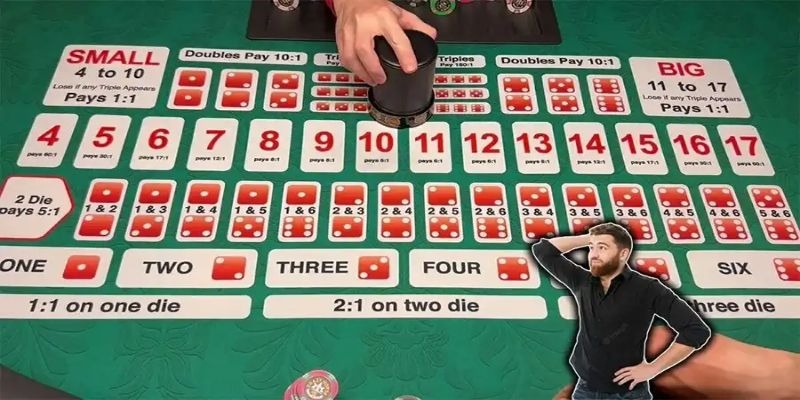
A step by step walkthrough of joining a table and placing wagers in live dealer Sicbo
The sequence is straightforward once you know where the controls sit and when the betting window closes.
Finding the right table
Open the live casino section rather than the general table games menu, then filter by dice. Studios usually run several tables side by side at different stake levels, so check the displayed minimum before joining rather than after.
Checking the essentials before you sit
Confirm three things: the payout schedule, the table limits and the provider name. A specific triple paying 150 to 1 instead of 180 to 1 changes the edge materially, and this detail is published in the table information panel rather than announced by the dealer.
Placing chips inside the countdown
Select a chip value, then click or tap the box you want. The timer is visible at all times, and bets placed in the final second are frequently rejected because of stream delay. Placing early in the window is the simplest way to avoid this entirely, and it is the habit that separates comfortable live dealer Sicbo players from frustrated ones.
Reading the result and settlement
The overlay displays the three faces and the total, winning boxes are highlighted, and your balance updates within a few seconds. Losing chips are cleared automatically before the next window opens.
Using rebet and auto controls
Most interfaces offer rebet, double and repeat functions. These are convenient on a fast table, though they also make it easy to stake without deliberate thought, so use them knowing that.
Technical Checks Before Playing Live Dealer Sicbo
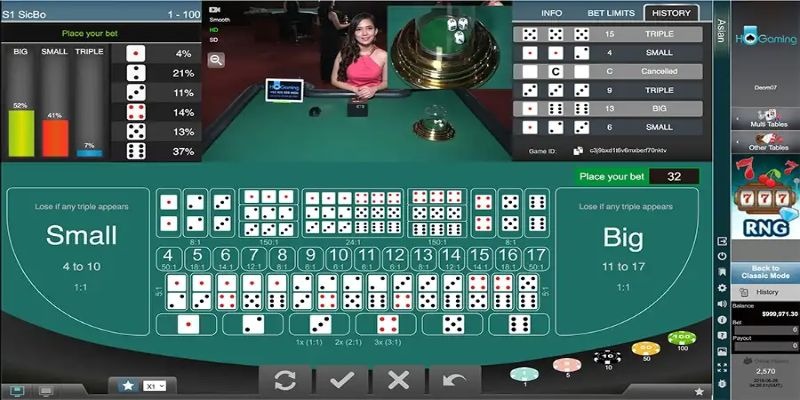
A practical checklist of connection and device settings that support smooth live dealer Sicbo sessions
Because the game runs on a live stream and a fixed timer, your setup affects your experience far more than it does with software tables.
| Item | Recommended setting | Why it matters |
| Connection | Stable broadband or strong mobile signal | Prevents dropouts mid round |
| Stream quality | Auto or medium rather than maximum | Fewer freezes during the countdown |
| Device orientation | Desktop or mobile in landscape | Full betting grid stays visible |
| Bet timing | Place early in the window | Avoids rejection from stream delay |
| Disconnection policy | Read before the first stake | Determines what happens to open bets |
| Session limits | Configure in account settings | Controls exposure on a timed game |
| Audio | Enabled if possible | Dealer announcements confirm the state |
The disconnection row is the one most players skip and most often need. Because rounds continue whether or not you remain connected, a bet already placed usually stands and settles normally, with the result visible in your history once you return. Confirming this policy in the tài xỉu rules section before you play removes the uncertainty from a moment when you cannot do anything about it anyway.
One further habit is worth building. The slower pace of a streamed table is genuinely useful, since it gives you time to think between rounds rather than clicking through them. Players who treat live dealer Sicbo as a slower, more considered version of the game tend to stake more deliberately and stay within their plan, which is a practical advantage the RNG format does not offer.
Conclusion
Live dealer Sicbo offers the same game with a different rhythm, and the adjustment is mostly about timing rather than tactics. Bet selection carries over unchanged, so the low edge boxes remain the sensible anchor, while the countdown, the stream delay and the higher table minimums are the genuinely new elements to plan around. Check the payout schedule and limits before joining, place your chips early in the window, read the disconnection policy once, and let the slower pace work in your favour rather than rushing through it. Approach the streamed dice tables at game đánh bài that way and the format becomes the most relaxed and readable version of the game available.